

CompanyPortfolioUse CasesBlogMediaCareerContact
iframe content

Artificial Intelligence

AI that remains understandable from concept to safe series production. We develop AI solutions for safety-relevant and regulated applications. Our focus is on causal AI, reinforcement learning, agentic AI, AI assurance and explainable AI — with clear KPIs, robust governance and a realistic path from prototype to a production-ready product.

FROM POC TO PRODUCTION

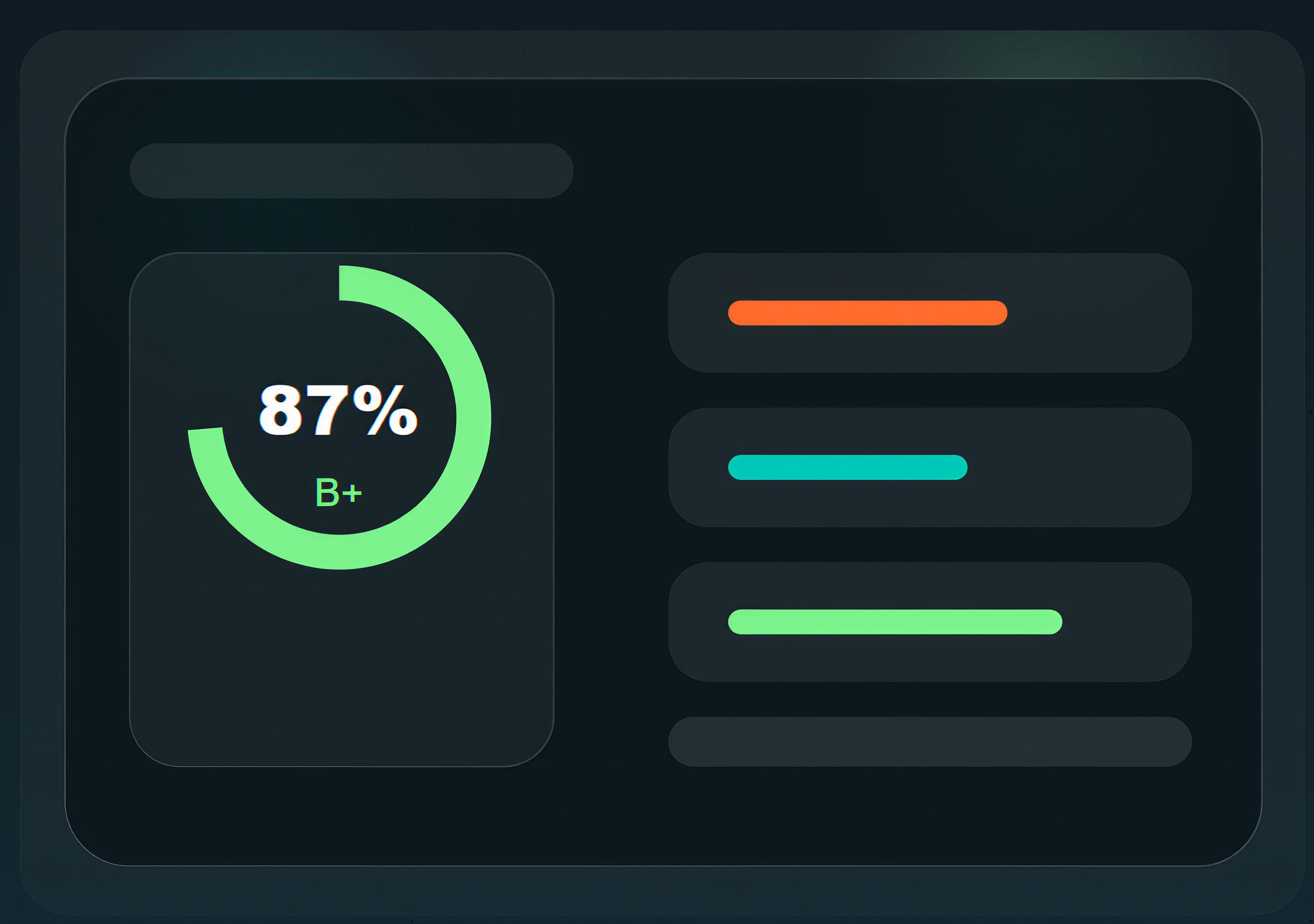
Technical implementation, integration and assurance for real-world deployment.

Explainable AI & measurable KPIs

Models, decisions and impact remain understandable for business and domain teams.

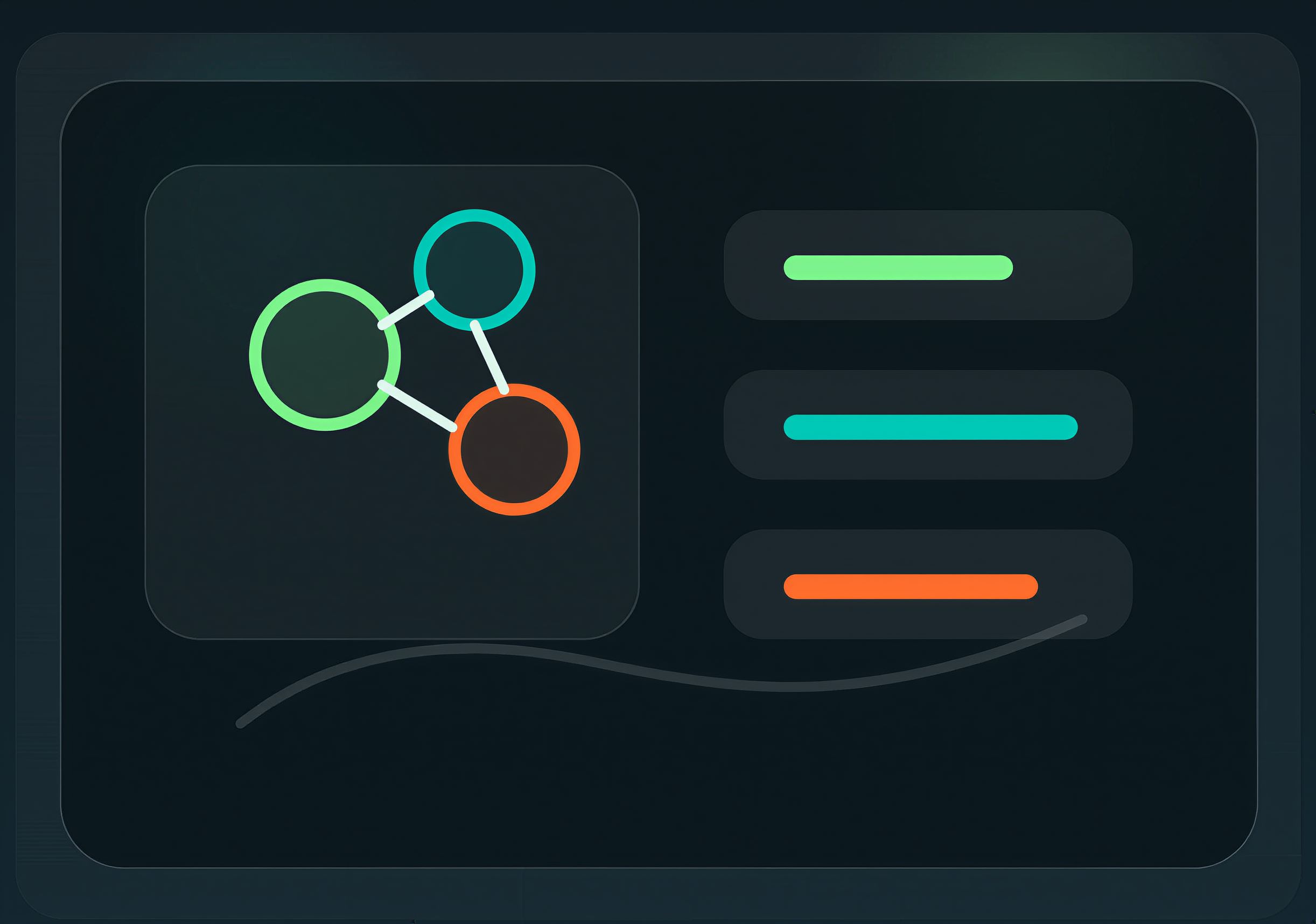
Robust governance

Evidence, assessment and regulatory classification are considered from the outset.
IN A NUTSHELL

Artificial Intelligence

We do not build AI as an isolated demo, but as a deployable solution: relevant to the use case, technically robust and properly documented for regulated environments. The result is solutions that not only work, but also remain explainable, verifiable and economically sound.

Contact

Clients & Industries

Where we apply AI in practice.

We deliver AI solutions for regulated and highly dynamic domains — where quality, technical robustness and explainable decisions all matter at the same time.

Our AI products

Products that make AI assessable and usable.

Our product building blocks complement project work wherever structured assessment, robust evidence and reusable workflows are essential.

Thetis

Thetis makes AI systems systematically assessable. The platform captures systems, classifies risks, generates robust assessment results and makes them usable for governance, audit and management.

Especially in regulated environments, strong model performance alone is not enough; you also need clear evidence of which requirements are met, where the risks lie and how technical results can be classified from a regulatory perspective.

Structured assessment of models and AI systems

Clear evidence for governance and documentation

Bridge between technical implementation and regulatory classification

Whyond

Using modern causal analysis methods, we identify more of the decisive influencing factors in defect and root-cause analyses. In finance, the same methods help evaluate audience targeting and actions based on their actual impact.

Whyond turns this approach into a solution for corner-case search, root-cause analysis and regulatorily robust evidence — wherever overlooked quality issues need to be made visible and data collection should be targeted more precisely.

Make corner cases and overlooked quality issues visible in a targeted way

Identify causes instead of mere correlations

Combine knowledge and data in a causal model

Capabilities

Artificial Intelligence across the entire AI & software lifecycle.

From data and model logic to KPIs, assurance, governance and integration into existing product and process landscapes.
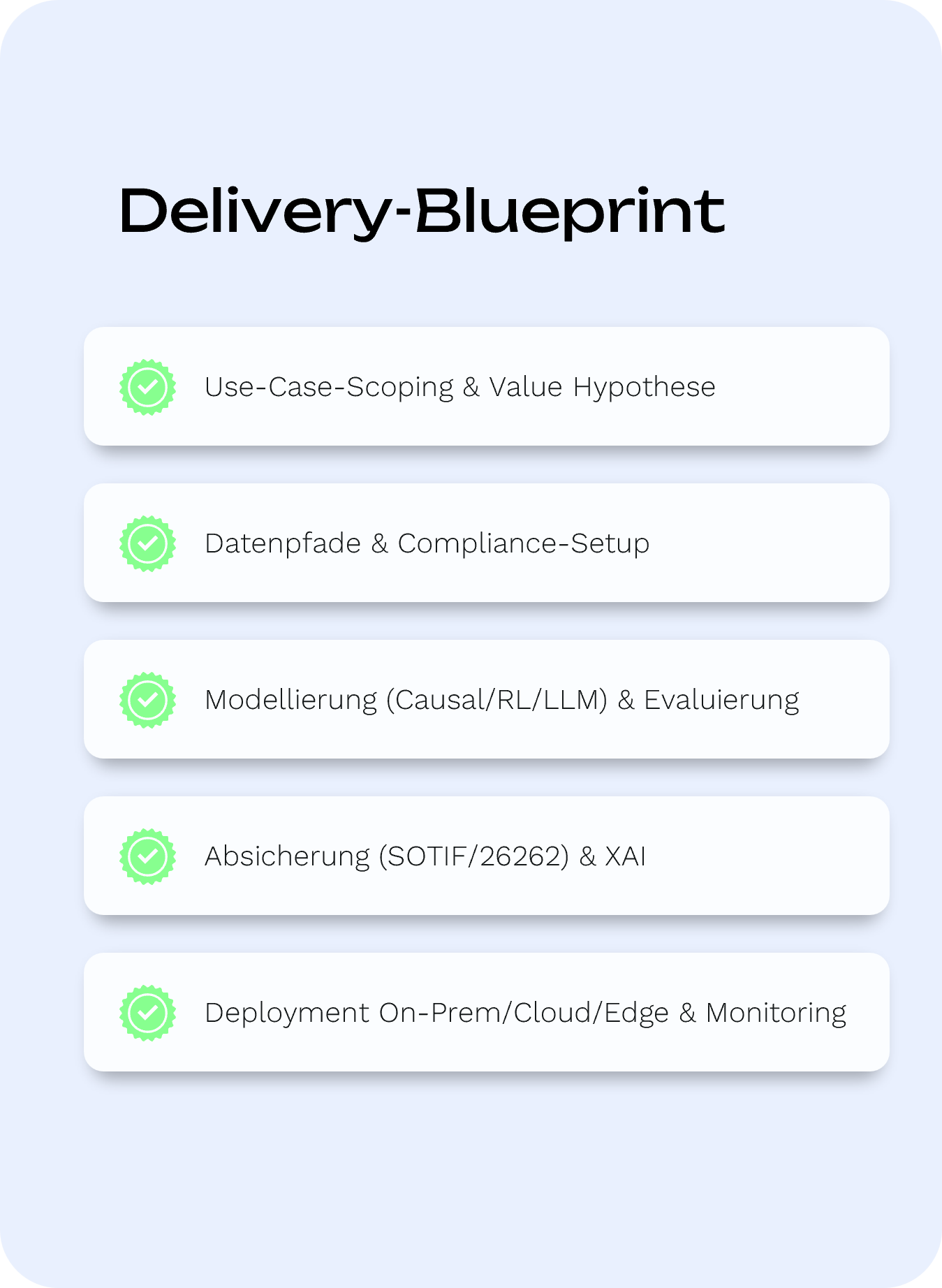
We use causal models to better understand relationships and prioritise measures more effectively. This is especially valuable where pure correlations are not enough — for example in root-cause analysis, targeting, policy optimisation or the evaluation of technical influencing factors.

  • Recognise causes instead of just patterns
  • Prioritise measures that are more likely to be effective
  • Support decisions with clear domain-based reasoning

For systems that need to make decisions in dynamic environments, we develop RL-based strategies that combine performance, stability and safety requirements. We pay particular attention to simulation, testability and a sensible operating model.

  • Suitable for sequential decisions and control tasks
  • Closely integrated with simulation and evaluation environments
  • Clear separation of training logic, guardrails and release criteria

We design agentic workflows and domain-specific language models wherever complex tasks need to be broken down into sub-steps, combined with rules and executed in a traceable way. Boundaries, roles and observability are key for us.

  • Agents with clearly defined tools, roles and responsibilities
  • LLM workflows with guardrails and traceable orchestration
  • Integrated into processes rather than isolated demo setups

We help teams understand substantive requirements, build technical evidence and align their solution architecture so that governance, risk management and documentation fit together.

  • Classification of use cases and obligations
  • Structure for documentation, roles and evidence
  • Close collaboration between engineering, business and compliance

AI must not only work; it must also behave reliably under realistic boundary conditions. That is why we treat data quality, robustness, edge cases, monitoring and traceable release criteria as an integral part of the development path.

  • Test design for real-world and critical scenarios
  • Quality and safety metrics for models and data
  • Clear guardrails for operations, updates and re-validation

From data understanding to evaluation, we build the foundation for data to be interpreted in a professionally meaningful way, visualised clearly and compared effectively. Clean data work, reproducible pipelines and robust operating models are also the basis for any AI project. We connect feature engineering with evaluation into a coherent, client-ready overall picture.

  • Automated data pipelines and analyses
  • Evaluation using domain-specific metrics and operational relevance
  • Scalable operations instead of manual, one-off processes

Case Studies

The following projects show three different perspectives on our portfolio: production-oriented driving functions, AI built from existing vehicle data, and a product for governance and compliance.

AI-assisted emergency trajectories
for SAE L3/L4

We are developing a system for highly automated driving functions that generates emergency trajectories designed to avoid collisions while complying with predefined safety objectives.

The focus is on an AI-supported decision logic that derives robust evasive and braking manoeuvres from the current driving context and can be described clearly for later evidence.

SAE L3/L4UNECE R157SOTIF

Steering wheel contact detection via software

Instead of adding extra hardware, existing vehicle telemetry is used to detect driver steering wheel contact in software. This reduces the cost of expensive sensing and creates a scalable solution for increasingly complex architectures.

The challenge lies in deriving robust conclusions from real signals: preparing data, identifying suitable features, training a model and evaluating the results so that they can inform development and product decisions.

AI as a SensorEmbeddedReinforcement Learning

Make AI measurable and auditable

Thetis turns scattered requirements into a structured process: capturing AI systems, classifying risks, generating assessments and making the results usable for governance, audit and management.

AI GovernanceAI AuditEU AI Act

Explainable AI & Governance

Make AI measurable, explainable and auditable.

Governance is not an add-on at the end for us. It belongs in development, in assessment and in communication with everyone who carries responsibility.

We are familiar with the substantive requirements and stay up to date with current and upcoming regulatory frameworks. This enables solutions to be built not only for performance, but also for compliance.

AI is not a black box for us. We develop representations and tools that make decisions understandable, assessable and usable for people in day-to-day project work.

We define evaluation metrics so that domain expertise, technical quality and governance speak the same language. That makes progress and risk tangible.

Symbol eines Anführungszeichens

Let's get started!

Automate processes, make products smarter and shorten time to market. Let us assess the potential of your use case. From initial scoping and evaluation to assurance and sustainable operation. We look forward to your questions.
Contact Form
Write to us about your use cases and how we might support you with your tasks. We will get back to you promptly.